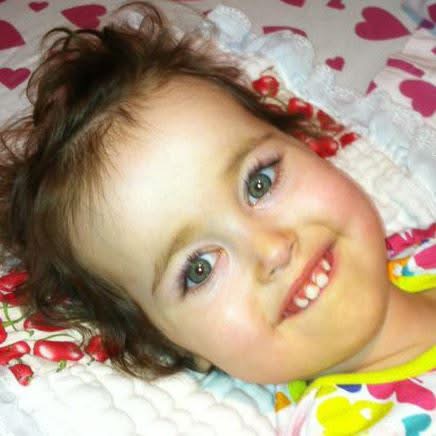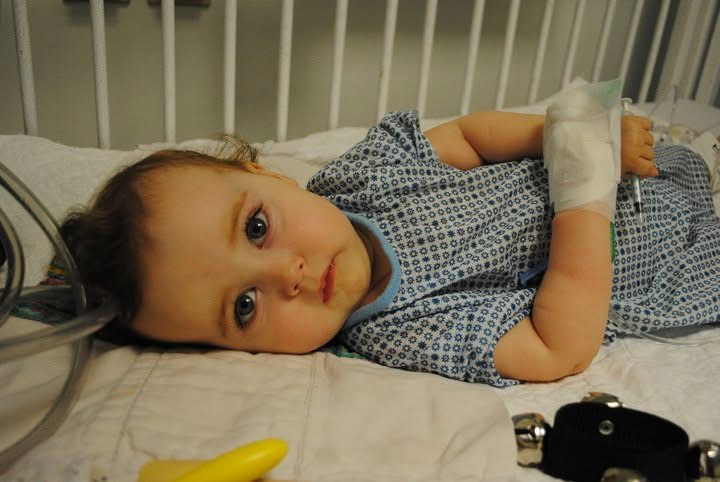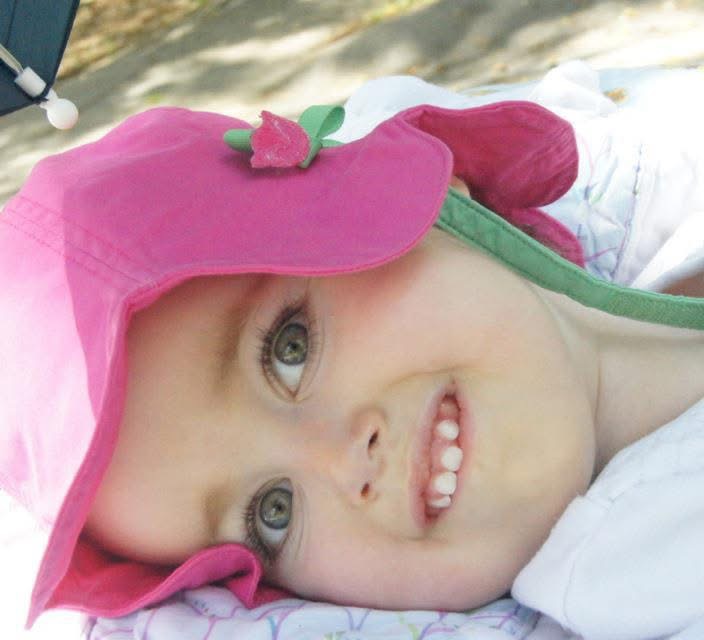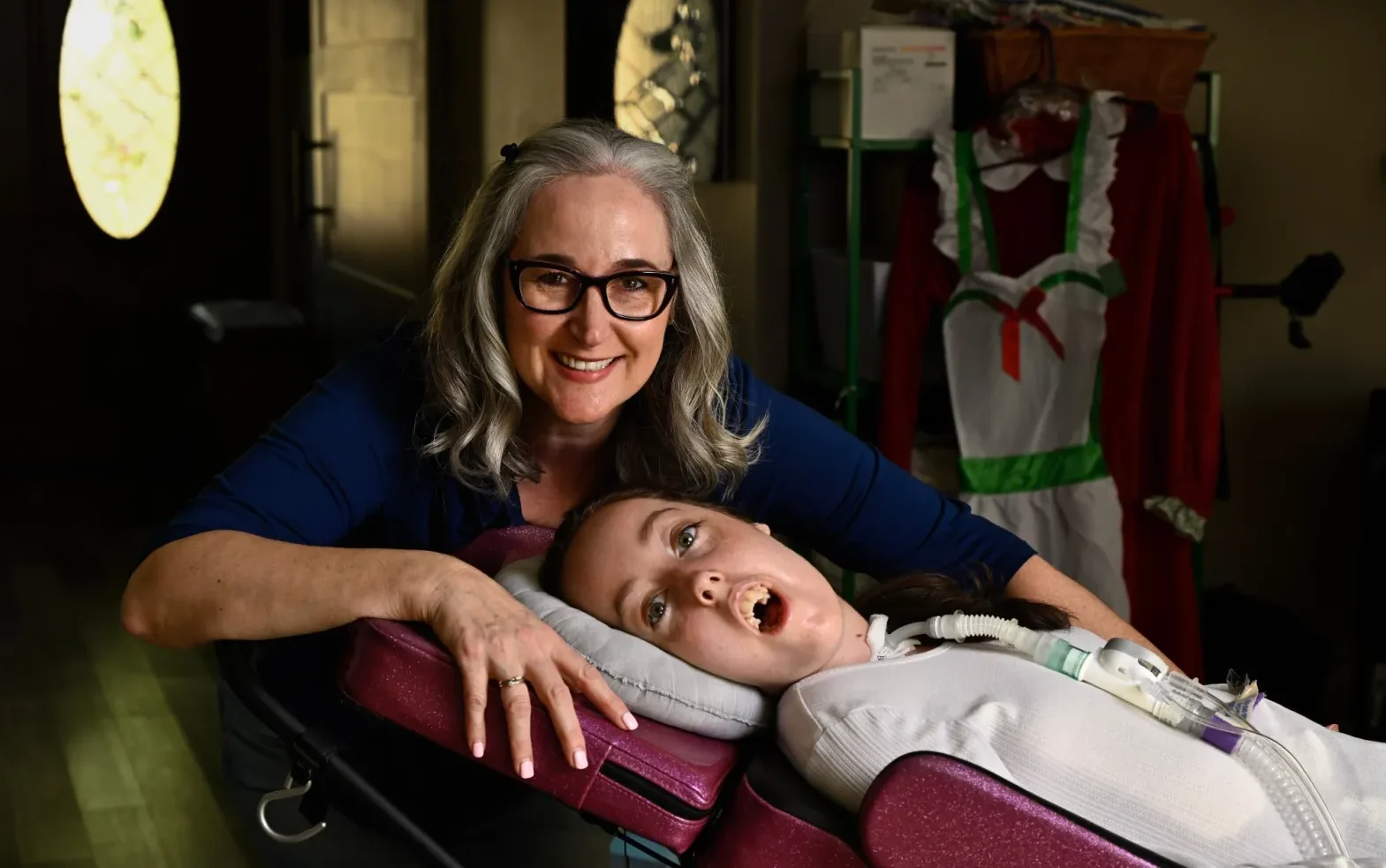
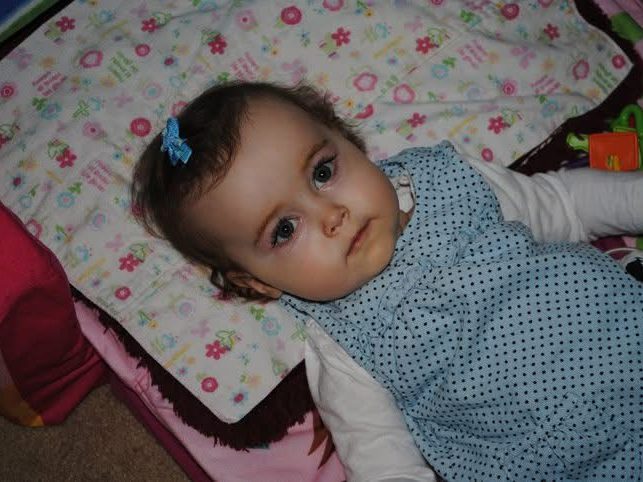
I remember crumbling to the ground when I learned that my 9-month-old daughter had been diagnosed with a terminal neuromuscular disease. She was playing on the baby mat just a few feet away, blissfully unaware of the diagnosis I had just learned about.
I couldn’t hold myself up. My knees buckled. My heart sank. After all the poking, prodding, and blood tests, my worst fear had come true. Every dream I had for my precious child felt stolen in an instant.
I railed at God.
How could a loving God do this to a child? It felt cruel. A disease that would rob her of all voluntary muscle movement – including breathing, coughing, and swallowing, and yet leave her mind in-tact so she would be fully aware of all of it?
Looking back, it’s so silly the things that popped into my head: I believed that I had done everything “right” (whatever that means) on my journey to becoming a parent: I went to college and graduate school, met and married a loving husband, had a good job as an attorney and a nice house – all in that order. I thought that somehow “doing it right” immunized me and my family from something like this.
I wallowed in “why me?” “why her?” “why my family?” I felt betrayed by life. The injustice of it nearly swallowed me whole.
For months after her diagnosis, I simple didn’t accept that this was what she faced – I was determined to find something, somewhere to treat her. I searched high and low, up and down, locally and afar. But there was nothing.
At some point, I had to make peace with the fact that, at least in that moment, there was no treatment. There was no cure. This disease was going to take its course and I was going to get a front row seat to it all. We were bracing for the fact that we might not even get two years with her.
Other than brief moments, that whole first year is a blur. I remember all the trips to the various specialists at the local children’s hospital and one specialist 500 miles away, as our local doctors weren’t well versed in all of the respiratory interventions available for children with her disease. Trips to Stanford to see a pulmonologist became routine.
I remember being told what to look for to know it was time for the next step – a feeding tube, breathing support, a suction machine. I remember that I could no longer buy clothes for my daughter that were not her current size because I absolutely could not bear the thought of her dying with a closet full of toddler size clothes that she would never get to wear.
My son started preschool within days of my daughter’s diagnosis and suddenly, this beautiful little boy who had nothing but love to give suddenly became a threat to my daughter. We wanted him to have normal childhood experiences, and yet him bringing home germs from preschool that could kill my daughter became a real possibility in my mind.
I felt this agonizing pain around the fact that it was my job to keep her alive (and not exposed to illness), and that this responsibility collided with just being Mommy to a 4-year-old little boy with a cold who just wanted to cuddle. Even writing this still brings tears to my eyes.
I was terrified of my son when he was sick and left my husband to care for him because if I got sick, I could easily give it to my daughter, and that could kill her. I had seen it happen in our disease community. Everything felt unsafe. My germophobic tendencies had taken root.
I felt inadequate as a parent in just about every way. I couldn’t protect my daughter from being born with this disease, and now I couldn’t even show up for my son the way I wanted to when he was sick.
We essentially lived in a bubble, leaving the house only for doctor’s appointments and outdoor activities with good ventilation – but never in cold and flu season. We were super selective about who we let into our home, and we regularly skipped family events if we had heard of another family member having so much as a sniffle.
My daughter’s disease progressed quickly. Within two months, she was regularly choking on her baby food and was scheduled for a feeding tube. The next month, she got a pulse oximeter, a machine that coughed for her, a suction machine, and a bipap for respiratory support. I remember how hard I cried when I realized it was no longer safe to breastfeed her. It was all so cruel.
Her first hospital admission for a cold was 4 months after her diagnosis. She was in the Pediatric Intensive Care Unit for more than two weeks, needing round-the-clock respiratory treatments and not tolerating her feeds through her g-tube. This experience repeated itself a few more times over that year.
I felt powerless, terrified, and trapped. I did get my footing in the routine – the new normal – but it was all so mechanical. I was largely numb. I lived in this space for literally years. (Yes, she made it past two years old!) I was bouncing between what I call the “White Knuckle War” – the deepest form of survival mode as a special needs parent, and “Functional but Fragile,” one step above true crisis mode, but where true living feels out of reach, impossibly scary, and where the little ecosystem that is the routine can fall into chaos so easily.
And then, it happened. Things began to shift. That still small voice got so loud I couldn’t ignore it anymore. I intuitively knew the next step. And, it felt huge and impossible, and yet, ESSENTIAL – as if LIFE itself was saying, “there is more than this.”
That story is for another time, but let me leave you with this: I believe there is a phase of this journey that we all must walk through as parents of children with special needs. It involves accepting that you cannot change your child’s diagnosis and that life won’t look like what you had “planned” for, and it’s a phase grounded in grief. It’s messy. It’s angry. It’s bitter. It’s sad. But it’s only meant to be a phase. We are not meant to live in that space. There will come a point when that still small voice in you starts whispering that it is time to move forward; that the life meant for you is not available if fear is directing your choices; and that everything is exactly as it is meant to be. If that last part doesn’t make sense yet, stick with me. It will.